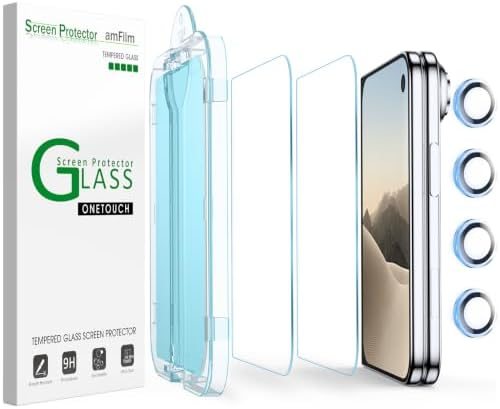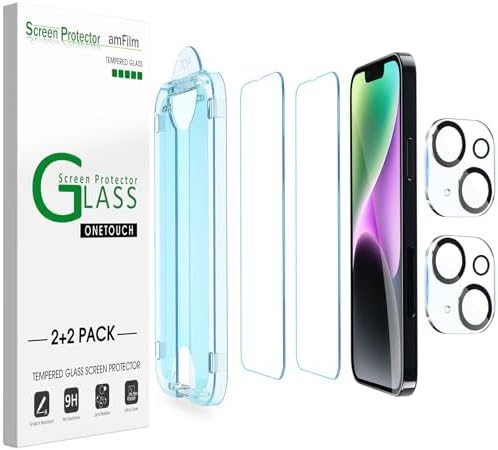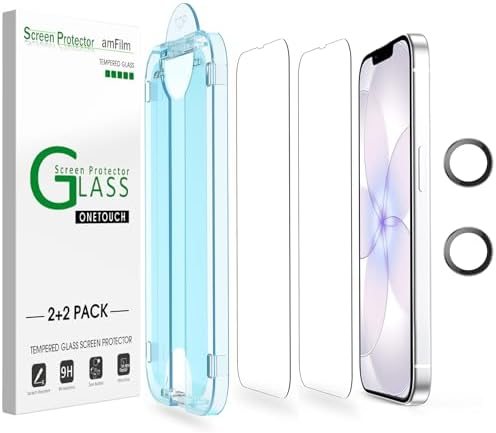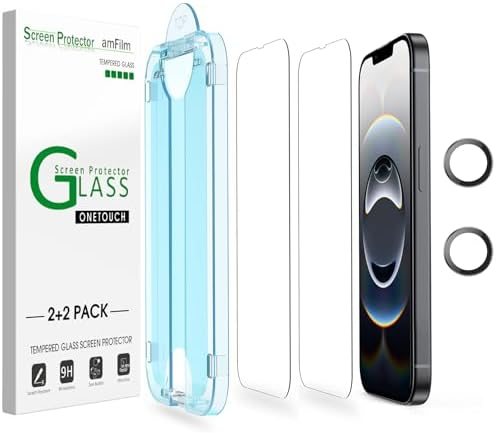
Tempered Glass Screen Protector for iPhone 17 Pro with Camera Lens Glass — 2 Pack
★★★★☆ 4.5 · 25,643 reviews



How the three finishes on our tempered glass screen protectors change clarity, glare, touch feel and the viewing angle of a screen.
A clear sheet is the screen protector that disappears. Light transmission sits above 99 percent, the colour of the original screen reaches your eye unchanged, and sharpness is identical to the bare display at any normal viewing distance. If you spent money on a good panel, this is the finish that respects it, and it is the finish most of our tempered glass screen protectors ship in.
The matte surface is micro-etched, so the protector scatters reflections instead of mirroring them. Outdoors, under office ceilings and anywhere near a window this is transformative. The cost is a very slight softening of fine text and a faint sparkle in white areas. Fingerprints effectively stop existing, and a stylus gets real friction on the glass instead of skating across it.
A privacy protector carries a microlouvre layer that cuts the viewing cone to roughly 30 degrees. Head on, the screen looks slightly dimmer. From the next seat it is black. The trade is real: you lose brightness, and landscape viewing is restricted on sheets cut for portrait use.
The finish is a surface treatment, not a different material. Impact behaviour, 9H hardness and the 2.5D polished edge are identical across every finish, so choosing matte never means choosing less protection — all three take an impact the same way and keep the damage off the original screen.
None of the three changes how long a sheet lasts against grit. Scratches land in the top coat first on every finish, and that coat is the same chemistry whether the surface above it is polished, etched or louvred. A year of pocket use leaves comparable wear on all of them, and in each case the tempered glass underneath is still intact when the coat is finished. Only the way the wear reads differs: on a clear sheet it shows as haze under raking light, on matte it hides almost completely, and on privacy it reads as a slight loss of contrast head on. Fitting does not change either, with one caution — a privacy screen protector is directional, so a sheet cut for portrait use darkens badly when the device is held in landscape, and the tray only drops one way round for exactly that reason.
Phones take any of the three, and the choice is about where the phone lives rather than what it is: indoors and you care about photos, clear; outdoors or reading for hours, matte; trains, planes and open-plan desks, privacy. Tablets and laptops used for drawing or note-taking are the strongest case for matte, because the etched surface gives a stylus something to bite on. Gaming handhelds are usually clear — the screen is the point, the device rarely leaves the house, and a matte coat would soften exactly the detail the panel was bought for. Whichever you pick, the glass screen protectors on each shelf here carry the same specification, so the decision is about the surface and never about how much protection the sheet gives.