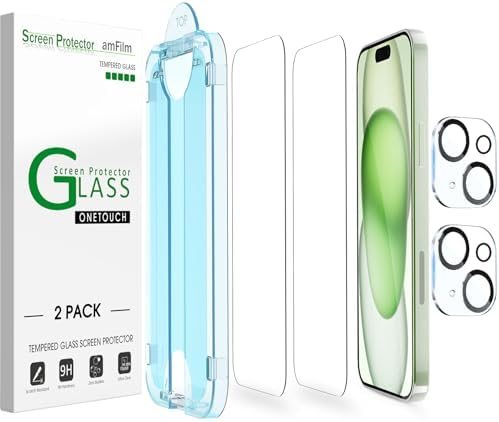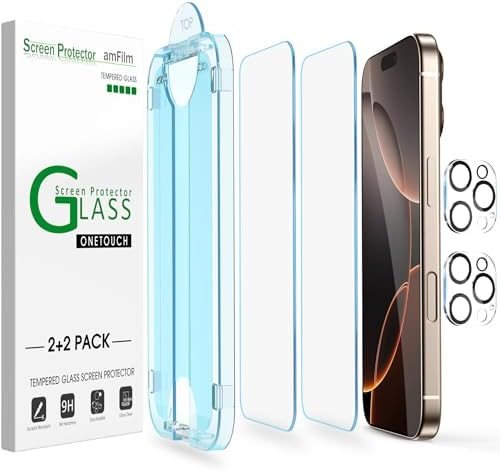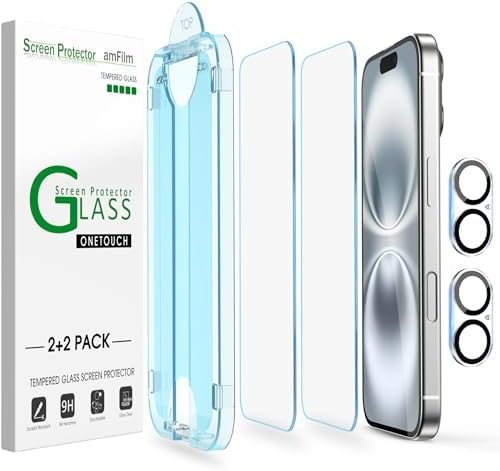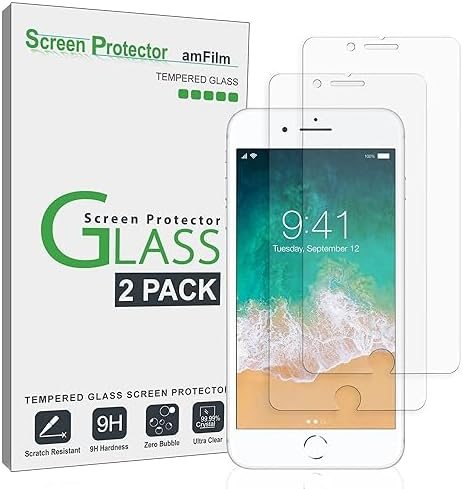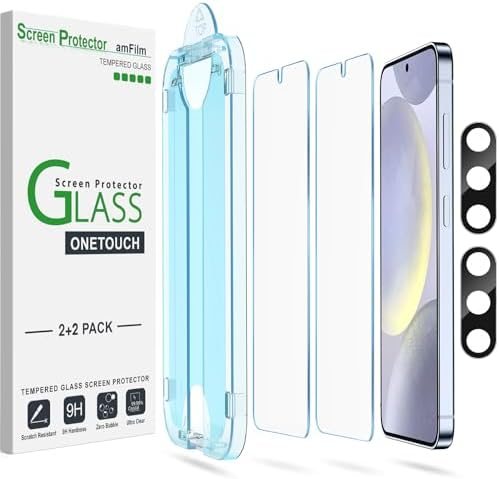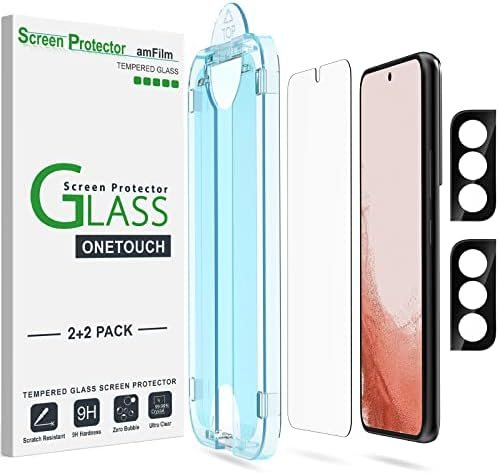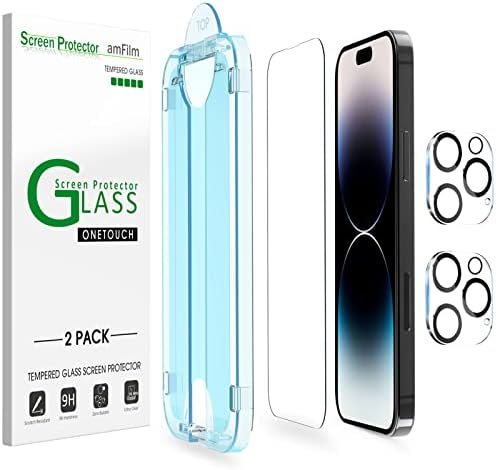
Tempered Glass Screen Protector for iPhone 14 Pro Max with Camera Lens Glass — 2 Pack
★★★★☆ 4.5 · 25,643 reviews



What actually differs between a tempered glass screen protector and a plastic film, and when film still makes sense.
When a corner lands on tile, a few joules of energy arrive at one point. Tempered glass is rigid, so it spreads that point load across its whole area and then fails on purpose — the sheet spiders and holds together in its own adhesive. Plastic film is compliant: it deforms, passes the energy through, and the original screen receives it intact.
Film scratches at roughly 3H on the pencil scale, about the hardness of a fingernail. Tempered glass runs at 9H, which is past steel keys and past the quartz grit that rides in every pocket. This is why a film looks tired after a few months of normal use and a sheet of glass looks new.
Glass is the only protector that feels like the device it covers. Film has a slight drag under a dry finger and a faint orange-peel texture in strong light. Clear tempered glass holds light transmission above 99 percent; a good film is a point or two behind and a cheap one is noticeably hazy.
On a display that curves hard at the edge — a folding phone, or a watch — film is the only thing that will follow the shape without lifting. Film is also thinner, which matters on a device with a very tight case. For anything with a flat or gently rounded front, we would fit glass every time.
A replacement protector is the price of a coffee round. A replacement display is most of the price of a phone. That asymmetry is the entire argument, and it is why we have never shipped a device-specific set without at least one spare sheet in it.